

Yuki Muto
Yuki Muto was a culinary producer and consultant who worked extensively both in Japan and abroad.
In the late 1980s, he lived in New York, where he explored not only American cuisine but also diverse food cultures from around the world. After returning to Japan, he planned and operated the country’s first authentic bagel school, “Bread on Bread”. Over five years, more than 4,800 participants attended—many of them professional bakers and product developers. His recipe book became a bestseller and played a key role in sparking Japan’s nationwide bagel boom.
In 2003, commissioned by Namco, he opened “SPOON BREAD”, Japan’s first popover specialty restaurant, in Jiyugaoka, Tokyo. For ten years, the restaurant was widely featured in the media and received high recognition in culinary competitions. He went on to produce a variety of projects, including events with the French cheese brand SAVENCIA FROMAGE & DAIRY, product development for McDonald’s Japan and Jonathan’s, and participation in Japanese tea and pastry contests.
He also worked with the Cool Japan Fund (METI) and Fuji TV’s “Iron Chef” on a Japanese food promotion in Jakarta, where he collaborated with Iron Chef Sakai on original recipes. In addition, he proposed product concepts to Vietnamese state-owned enterprises, created collaborative sweets with international music labels, and organized live events with artists in Japan and overseas. Through these projects, he consistently highlighted the multifaceted appeal of food, culture, and design.
Building on this diverse career, he now serves as the producer of Bon.Sai, where he is responsible for concept development, brand strategy, and overall operations.
Pancho Asakura
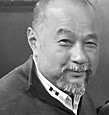
Pancho Asakura has been devoted to the promotion of mezcal and tequila for over 50 years, establishing himself as one of the foremost pioneers in Japan.
In 1976, during his stay in Guadalajara, Mexico’s second-largest city, he encountered mezcal, tequila, and a wide array of Mexican cuisine—an experience that profoundly shaped the course of his life. He returned to Guadalajara in 1979, and after resettling in Japan, he continued to travel frequently between the two countries, tirelessly introducing and promoting mezcal and tequila, and paving the way for the culture of mezcal in Japan.
Building on the network he cultivated in Mexico over five decades, he has led various initiatives as a mezcal expert.
After serving as one of only six Global Mezcal Ambassadors (CRM) worldwide, he was appointed in 2023 as Japan’s first Official COMERCAM Mezcal Ambassador.
Today, he also serves as the Spirits Curator for DORADO13, a collection of exceptional Mexican spirits, continuing to act as a bridge between Mexico and Japan while sharing the multifaceted appeal of these spirits.

Jun Sato
Born into a family of master craftsmen spanning generations, he was raised in Asakusa, where the spirit of craftsmanship and Edo culture has long thrived.
After graduating from university, he engaged in a wide range of creative work, including corporate office and retail design, furniture design, logo creation, and stage art. In 1989, at the request of the renowned Polish film director Andrzej Wajda, he was responsible for producing stage elements—including chairs—for “Nastassja”, starring Tamasaburo Bando.
Through these projects, he established a solid reputation in both spatial design and sculptural form.
In the field of Edo cultural studies, he has lectured at universities in Tokyo on the theme of “Edo Elegance (Iki).” He also oversaw the dedication of historically significant senshafuda ukiyo-e prints to Kanda Myojin Shrine. Actively committed to the preservation and promotion of traditional Japanese culture, he serves as a full member of the Taito Historical City Research Association and as an advisor to Raiden Shrine in Kiryu City, playing an important role in cultural heritage stewardship.
As a member of Bon.Sai, he has been involved in building domestic distribution networks for Mexican mezcal and rum. In addition, within Japanese sake export initiatives, he serves as a discerning curator, responsible for quality selection and the communication of cultural value. Acting as a bridge between Japan’s traditions and global spirits culture, he applies his refined aesthetic judgment and expertise to the creation of new cultural value.
Senior
Scientific
Advisor
Nobuyuki Hitomi
Nobuyuki Hitomi is a pharmacist and researcher with extensive expertise in the research and development of Kampo medicine and crude drugs (shoyaku). Throughout his career, including his years at the Kampo Research Institute of Kanebo, he made significant contributions to establishing analytical methods and quality standards for crude drugs in Japan.
From the 1980s through the 1990s, he published numerous studies on the identification, analysis, and standardization of crude drugs. His research included the analysis of amygdalin in apricot kernel (Kyounin) and studies on the botanical origins and quality of citrus-derived crude drugs such as Chinpi (Citrus Unshiu Peel).
His pioneering work in crude-drug analysis, including research presented at professional scientific conferences, contributed to the development and revision of testing methods associated with the Japanese Pharmacopoeia, Japan’s official compendium of pharmaceutical standards. His work also helped establish the scientific and regulatory foundations supporting the safety, quality, and consistency of Kampo medicines in Japan.
From 1982 to 1998, Hitomi participated in a number of research projects associated with Japan’s Ministry of Health and Welfare. As part of the Japanese Pharmacopoeia committees, he contributed to the establishment of quality standards and analytical methods for crude drugs, as well as microbial limit standards and testing methods.
He also participated in research programs that established regulatory standards for prescription Kampo extract formulations and served as the head of a research group responsible for developing GMP standards for prescription Kampo products. The resulting Kampo GMP guidelines were translated into English and distributed internationally, contributing to the development of GMP concepts for medicinal products derived from natural materials.
During this period, he also held senior positions within major industry organizations, including the Japan Kampo Medicines Manufacturers Association and the Federation of Pharmaceutical Manufacturers’ Associations of Japan, where he was involved in OTC and prescription Kampo medicines, GMP, technical standards, international affairs, and matters related to the Convention on International Trade in Endangered Species (CITES).
His expertise also extended internationally. At the request of Japan’s Ministry of Health and Welfare, he provided guidance and training to government officials responsible for GMP in Southeast Asian countries. He also represented Japan at the World GMP Conference in Malaysia, where he delivered a presentation in English on Kampo GMP.
After joining JRJ Co., Ltd. in 1998, he expanded his work into the development of pharmaceuticals, quasi-drugs, cosmetics, dietary supplements, and royal jelly products. Between 1998 and 2011, he was involved in the development and launch of one pharmaceutical product, one quasi-drug, three cosmetic products, and fifteen dietary supplements. He also contributed to the establishment of a technical research institute and the development of GMP-compliant manufacturing operations.
Hitomi has additionally promoted extensive industry–academia collaboration with institutions including the University of Tsukuba, Nihon University, Asahikawa Medical University, Tohoku University, Tohoku Pharmaceutical University, and Ishikawa Prefectural University. These collaborative studies covered subjects ranging from royal jelly proteins and apisin to antimicrobial activity, dementia, diabetes, and the potential applications of natural bioactive compounds.
In more recent years, drawing upon decades of experience in crude drugs, Kampo medicine, pharmaceuticals, and natural products, he has served in advisory and R&D leadership roles for companies including Japan Royal Jelly Co., Ltd., contributing to product development, scientific evaluation, and research involving royal jelly, natural ingredients, and dietary supplements.
Career
1963 — Assistant, Department of Biochemistry, Osaka College of Pharmacy (currently Faculty of Pharmacy, Osaka Medical and Pharmaceutical University)
1964 — Researcher, Pharmaceutical Research Institute, Tanabe Seiyaku Co., Ltd.
1978 — General Manager, Pharmaceutical Research Department, Kampo Research Institute, Kanebo Ltd.
1998 — General Manager, Research & Development Department, JRJ Co., Ltd.
2000 — President, R&M Co., Ltd. (later JRJ Pharmaceutical Co., Ltd.)
2006 — Executive Officer & Director, Technical Research Institute, Japan Royal Jelly Co., Ltd.
2011 — Executive Officer, Life Support Division, Medicom Co., Ltd.
2013 — Advisor, Sou-Two Shoji Co., Ltd.
2014 — Advisor, T Healthcare Co., Ltd.
2015 — Head, Supplement Business Development, Cherish Life Japan Co., Ltd.
2019 — Advisor, Japan Royal Jelly Co., Ltd.
Professional & Academic Contributions
Until 1998, Hitomi served in several positions within the Japan Kampo Medicines Manufacturers Association, including Chairman of the OTC Kampo Products Committee, Vice Chairman of the Prescription Kampo Products Committee, Vice Chairman of the Technical Committee, and member of the International Committee.
He also served as Vice Chairman of the Standing GMP Committee and as a member of both the International Committee and CITES Committee of the Federation of Pharmaceutical Manufacturers’ Associations of Japan.
From 1982 to 1998, he participated in Ministry of Health and Welfare-related research projects concerning the Japanese Pharmacopoeia, Kampo extract preparations, and GMP standards for prescription Kampo medicines. He also presented and published research through the Japanese Society of Pharmacognosy and the Society for Antibacterial and Antifungal Agents, Japan, and formerly served as an executive member of the Kansai Branch of the Japanese Society of Pharmacognosy.

Hiroyuki Hasegawa
Hiroyuki Hasegawa is a food creator with a unique sense of artistry.
Born in Niigata, he once belonged to a local music agency and performed as a band musician in Niigata and Tokyo. However, a journey through the United States inspired him to pursue the path of bread-making. Drawing on his creativity and expressive spirit, he has since built a distinctive career in the world of artisanal baking.
Currently, he is dedicated to refining his craft as an artisan baker while also conducting research on fermentation to further deepen his expertise.
Career Highlights
-
2011 – LA SAISON (Shibuya, Tokyo)
-
2017 – BAKE BREAD (Shinjuku, Tokyo) — Served as store manager for five years from its founding
-
2022 – PARKLET BAKERY (Nihonbashi, Tokyo)
-
2023–2025 – SAWAMURA (Karuizawa, Nagano)

Kei Muto
Kei Muto, born in South Korea, is a culinary researcher and creative director who enjoys exploring the crossroads of food, culture, and design.
From 2008 to 2013, Kei was part of the team behind Spoon Bread in Jiyugaoka, Tokyo—Japan’s very first popover café and restaurant. There, Kei created menus that highlighted seasonal ingredients from across Japan and organized events that brought in flavors from Mexico and Brazil.
Since the café’s ten-year journey came to an end in 2013, Kei has continued to develop recipes, write about food, and share ideas as a culinary researcher. Kei is also passionate about connecting Japanese and Korean food cultures, working on projects that celebrate both traditions.
Selected Achievements
-
Planned and directed events at Spoon Bread promoting Brazilian and Mexican cuisine, including menu development and event direction in collaboration with the Brazilian Embassy (2010)
-
Awarded 1st Prize in the Professional Division of the Tokyo Culinary Contest featuring locally produced agricultural, forestry, and fishery products (2010)
-
Appeared as a guest instructor on NHK’s children’s program Cooking Idol Ai! Mai! Main! DVD “Sweets Edition,” teaching popover desserts (2010)
-
Directed a promotional campaign for Kagawa Prefecture’s local ingredients at Spoon Bread (2012)
-
Served as chef and Japan–Korea coordinator at the UNESCO Creative Cities of Gastronomy Festival in Jeonju, South Korea, and signed an MOU with the Jeollabuk-do Chefs Association (2017)
-
Contributed to Tobu Railway’s monthly magazine “To-Bu” with articles on world cuisine and sweets, as well as a home recipe series (2017–2018)